Why the Financial Module Is the Backbone of ERP Success in India
Discover how a modern ERP financial module can improve cash flow visibility, automate compliance, streamline reporting, and support business growth. Speak with our ERP specialists to evaluate the right financial management strategy for your organization.
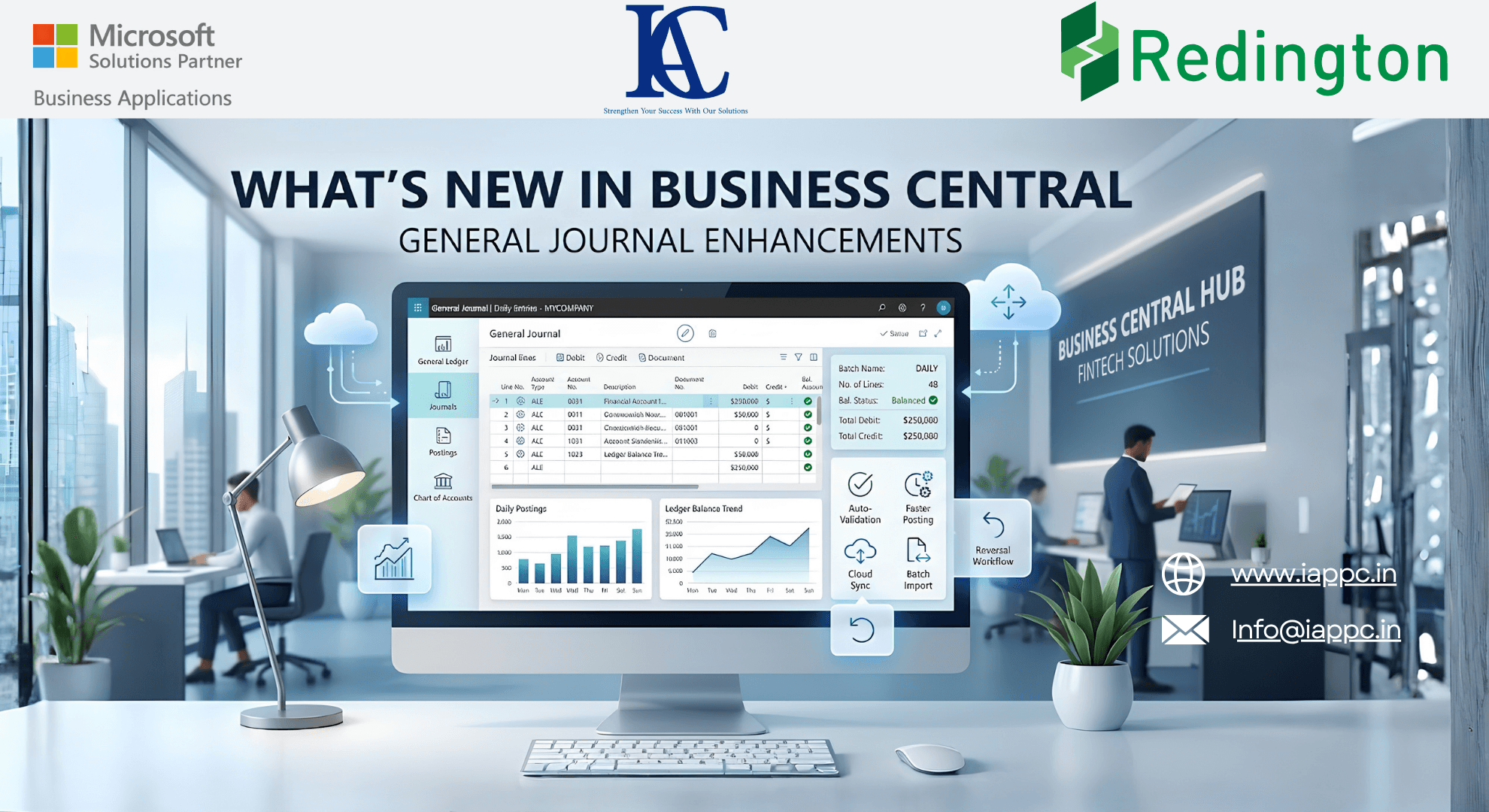
When business owners think about ERP, they often picture inventory, sales, or operations.
But in reality, the financial module is the true backbone of any successful ERP implementation.
Without strong financial control, growth becomes risky. Decisions become reactive. Regulation becomes stressful.
For companies planning ERP implementations, especially in India’s competitive, regulated market, the finance module is not just another feature; it is the core engine that drives stability and scalability.
With 12+ years of experience delivering ERP solutions across Pan India, our team has seen one consistent truth:
Businesses that prioritize finance during ERP implementation grow faster and operate with greater confidence.
What Is the Financial Module in ERP?
The financial module in modern ERP systems like Microsoft Dynamics 365 Business Central centralizes all financial data into one unified platform.
It connects:
General Ledger
Accounts Payable
Accounts Receivable
Bank Reconciliation
Fixed Assets
GST, TDS, VAT regulation
Budgeting & Forecasting
Multi-currency transactions
Instead of managing finance through spreadsheets and disconnected software, ERP integrates everything in real time.
For Indian businesses, this means:
Faster month-end closing
Automated regulation
Real-time cash flow visibility
Reduced manual errors
Why the Financial Module Matters for Indian Businesses
India’s regulatory environment is dynamic. GST updates, tax regulation rules, and financial reporting requirements demand precision.
Manual systems or outdated accounting tools create:
Data silos
regulation risks
Reporting delays
Poor visibility into profitability
With a strong finance module, business owners and CFOs can see:
Revenue trends
Expense breakdowns
Profit margins
Outstanding receivables
Vendor liabilities
All in one dashboard.
This clarity enables smarter decisions, not guesses.
Key Capabilities of a Modern ERP Financial Module
1. Real-Time General Ledger & Reporting
The general ledger becomes a single source of truth.
Financial reports such as:
Profit & Loss Statements
Balance Sheets
Cash Flow Reports
Can be generated instantly, without manual consolidation.
With built-in integration to tools like Microsoft Power BI, leadership teams gain visual dashboards for strategic decision-making.
2. Automated Accounts Payable & Receivable
Delayed collections affect cash flow.
Modern ERP finance modules automate:
Invoice generation
Payment reminders
Aging analysis
Vendor payment scheduling
This improves working capital management, especially important for SMEs operating in competitive markets.
3. GST, TDS & Multi-Currency regulation
For companies operating across states or internationally, regulation complexity increases.
ERP systems automatically:
Calculate GST
Manage TDS
Adjust exchange rates
Generate statutory reports
This reduces dependency on manual calculations and lowers audit risks.
4. Budgeting, Forecasting & Financial Planning
A powerful finance module does not just track past transactions; it predicts future trends.
Using AI-enabled features like Microsoft Copilot, businesses can:
Forecast revenue
Analyze spending patterns
Identify cost leakages
Plan expansion strategies
Finance becomes proactive instead of reactive.
Why Choosing the Right ERP Team in India Matters
Even the best ERP software can fail without the right implementation partner.
A finance module requires:
Accurate configuration
regulation mapping
Process alignment
User training
Data migration accuracy
With 12+ years of ERP implementation experience across Pan India, our team ensures:
✔ Industry-specific financial setup
✔ Seamless migration from legacy systems
✔ Integration with banking systems
✔ Role-based access controls
✔ Post-implementation support
We do not just install ERP.
We design financial control systems tailored to your business model.
Finance Integration Across Departments
One of the biggest advantages of ERP is cross-department visibility.
When finance connects with:
Sales
Inventory
Procurement
Manufacturing
You gain complete cost transparency.
For example:
Sales orders instantly reflect revenue projections
Inventory valuation updates automatically
Purchase orders update liability forecasts
Manufacturing costs are calculated in real time
This eliminates departmental silos and builds financial discipline across the organization.
Ideal for SMEs and Growing Enterprises
Many SMEs hesitate to adopt ERP, thinking it is only for large corporations.
But modern ERP solutions are designed specifically for small and mid-sized businesses.
The right financial module helps SMEs:
Control cash flow
Improve collection cycles
Monitor profitability by project or department
Scale operations confidently
With proper guidance from an experienced ERP team in India, implementation becomes structured, efficient, and ROI-driven.
The Competitive Advantage of Financial Visibility
In today’s business environment, speed matters.
Companies that close books faster, track margins accurately, and forecast better outperform competitors.
Financial awareness is not optional anymore.
It is the difference between:
Growing with confidence
OR
Scaling with uncertainty
The finance module transforms ERP from an operational tool into a strategic growth platform.
Why Partner With the Best ERP Team in India?
With over 12 years of expertise and successful implementations across Pan India, our ERP specialists understand:
Indian tax regulations
Industry-specific regulation needs
SME financial challenges
Scalable ERP architectures
We combine technology with financial process expertis , ensuring your ERP system strengthens your financial foundation.
Ready to Strengthen Your Financial Control?
If you are looking to implement or upgrade your ERP financial module, now is the right time.
Book a demo with our expert ERP team and discover how a structured financial module can improve accuracy, regulation, and business growth.