Which Business Processes Should You Automate With AI First? A Practical Prioritization Guide
Overwhelmed by AI hype? Discover a practical 2x2 prioritization matrix to identify high-ROI business process automation targets and avoid costly pilot failures.
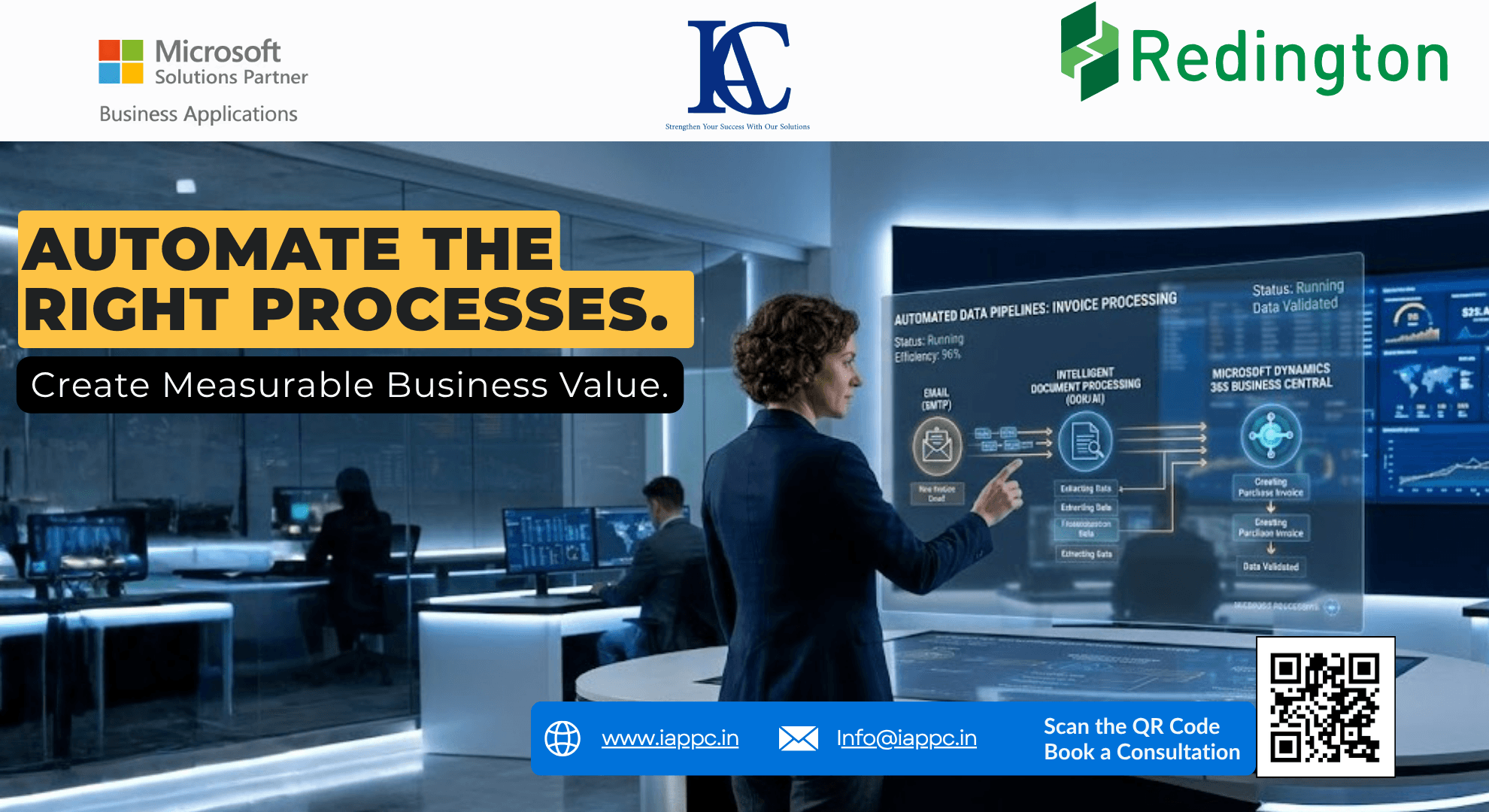
Introduction: Cutting Through the Artificial Intelligence Hype
In the current corporate landscape, artificial intelligence dominates board-level discussions. Technology vendors promise revolutionary transformations, pitching general-purpose autonomous copilots and enterprise-wide chatbots.
Yet, behind the headlines lies an uncomfortable reality: according to recent technology research reports, over 70% of enterprise AI pilot projects stall in the proof-of-concept phase, failing to deliver measurable financial ROI or reach production deployment.
Why does this failure pattern recur?
The primary culprit is not technological deficiency. It is an erroneous prioritization strategy. Organizations routinely attempt to apply AI to high-ambiguity, subjective, and creative workflows, such as automated executive strategy drafting or unsupervised customer contract negotiations, where human judgment is paramount and error tolerance is zero.
Conversely, the most lucrative, dependable, and transformative enterprise AI implementations are deliberately unglamorous. They focus on narrow, structured, high-volume operational bottlenecks where data moves slowly between legacy systems, consuming hundreds of valuable human hours every month.
To capture genuine competitive advantage, enterprise leaders must transition from asking "What can AI do?" to asking "Which specific operational friction point will deliver measurable time and cost recovery if automated today?"
1. The Root Cause: Why Enterprise Automation Pilots Fail
Before selecting workflows for automation, leadership must diagnose why past initiatives stalled:
Lack of Defined Workflow Inputs and Boundaries
An automation algorithm cannot optimize a process that human operators cannot consistently describe. When an operational task relies on undocumented tribal knowledge, informal side conversations, or unstandardized email formats, automating it simply accelerates chaos.
Confusing Task Automation with Workflow Automation
Automating a single step, such as generating a summary of an email, does not solve operational lag if an employee still has to manually copy that summary into an ERP system, email a manager for sign-off, and update a spreadsheet. Value is realized only when end-to-end workflows are connected.
Lack of Human-in-the-Loop Governance
Attempting 100% unsupervised autonomy on critical business workflows creates justified organizational resistance. Systems that lack clear exception-handling mechanisms, confidence thresholds, and human escalation paths inevitably face user rejection.
2. The 2x2 AI Automation Prioritization Matrix
To systematically evaluate candidate workflows, Innovative TechPlus applies a structured evaluation model based on two critical axes: Business Value & Impact versus Implementation Complexity & Risk.
The 4 Evaluation Criteria for Starter Workflows:
High Volume & Repetition: The task occurs dozens or hundreds of times per week.
Standardized Digital Inputs: Inputs arrive as structured or semi-structured data (PDF invoices, digital orders, web forms, system logs).
Deterministic Rules with Bounded Reasoning: The workflow follows clear business rules, requiring AI only to parse ambiguous text, classify intent, or extract fields.
Measurable Baseline Metrics: Current operational cost, human labor hours, and error rates are precisely known before deployment.
3. The Top 4 High-ROI Starter Workflows to Automate First
Accounts Payable Invoice Ingestion and 3-Way PO Matching
The Friction: AP clerks spend hours opening vendor emails, keying PDF line items into accounting software, and manually matching invoices against purchase orders and warehouse receipt logs.
The AI Solution: AI document intelligence models automatically extract vendor details, tax identification, line items, and invoice numbers directly from incoming email attachments. Business Central automatically cross-references lines against open POs within pre-set tolerance thresholds, routing variances to managers in Microsoft Teams.
Business Impact: Slashes invoice processing cost by 70% and reduces processing cycle time from 4 days to under 30 minutes.
Multi-Channel Customer Inquiry Triage and Ticket Routing
The Friction: Customer service and sales inboxes are inundated with hundreds of unstructured emails. Human coordinators must read every message, determine intent (order status, quotation request, billing dispute, technical issue), and forward it to the appropriate department.
The AI Solution: An AI classification agent parses message intent, extracts key customer account numbers, queries the ERP database for order status, and either responds automatically to routine requests or routes the inquiry with draft responses to the correct specialist.
Business Impact: Reduces first-response time by 80% and ensures zero customer inquiries fall through inbox cracks.
Semi-Structured Document Extraction and ERP Data Entry
The Friction: In logistics, manufacturing, and distribution, documents such as bills of lading, laboratory test certificates, and shipping manifests arrive in hundreds of non-standardized formats, requiring manual transcription.
The AI Solution: Multi-modal vision and document models parse complex tabular layouts, map unstructured text to standard ERP database fields, and validate data types before committing records to the general ledger.
Business Impact: Eliminates 95% of manual data entry errors and accelerates dock receiving speed.
Routine Management Reporting Summarization
The Friction: Analysts spend hours pulling raw transactional tables into spreadsheets and writing repetitive narrative summaries for weekly executive decks.
The AI Solution: AI agents query underlying Business Central semantic models via Power BI, compute week-over-week variances, and generate executive summaries highlighting top-performing product lines and margin discrepancies.
Business Impact: Delivers instantaneous executive visibility and frees senior analysts for strategic modeling.
4. Implementation Blueprint: Moving from Pilot to Production
Executing a successful automation initiative follows a disciplined 4-stage sprint:
Stage 1: Process Mapping & Baseline Audit (Week 1–2): Map inputs, decisions, exceptions, and baseline cycle times for one specific workflow.
Stage 2: Solution Architecture & Governance (Week 3–4): Configure AI models (Azure OpenAI, Copilot Studio, Power Automate), define security roles, and establish human review gates.
Stage 3: Controlled Sandbox Validation (Week 5–6): Run the automation in parallel with human operators on historical data to benchmark accuracy.
Stage 4: Phased Production Cutover (Week 7+): Deploy into live operations, monitoring exception rates and user feedback continuously.
Frequently Asked Questions (FAQ)
What technology stack is best for mid-market business process automation?
For enterprises utilizing Microsoft infrastructure, the most cost-effective and secure stack is Microsoft Power Automate paired with AI Builder, Copilot Studio, and native Dynamics 365 Business Central API connectors, maintaining enterprise data security within your Microsoft 365 tenant.
How do we handle edge cases where the AI is uncertain?
Modern AI workflows utilize confidence threshold scoring. If an extraction or classification model scores below a pre-set reliability rating (e.g., 90%), the transaction is flagged and diverted to a human review queue with the uncertain field highlighted.
What is the typical payback timeline for starter AI automation projects?
Starter workflows focusing on AP processing, document extraction, or query routing routinely achieve full financial payback within 3 to 6 months through recovered labor hours and eliminated dispute costs.
Conclusion & Strategic Next Steps
The future of enterprise competitiveness is not about deploying flashy conversational chatbots; it is about systematically eliminating operational friction across core business workflows. Starting with narrow, high-value, and measurable automation targets establishes organizational confidence and delivers immediate financial return.
Strategic Call to Action (CTA)
Ready to identify and prioritize your company's highest-ROI automation opportunities?
Connect with Innovative TechPlus (ITP) today to schedule an AI Process Discovery Assessment and receive a tailored implementation roadmap.