Real-Time Order Management — Anywhere, Anytime
Simplify order and invoice management with real-time automation and ERP integration. Help your distribution business process orders faster and manage sales efficiently.
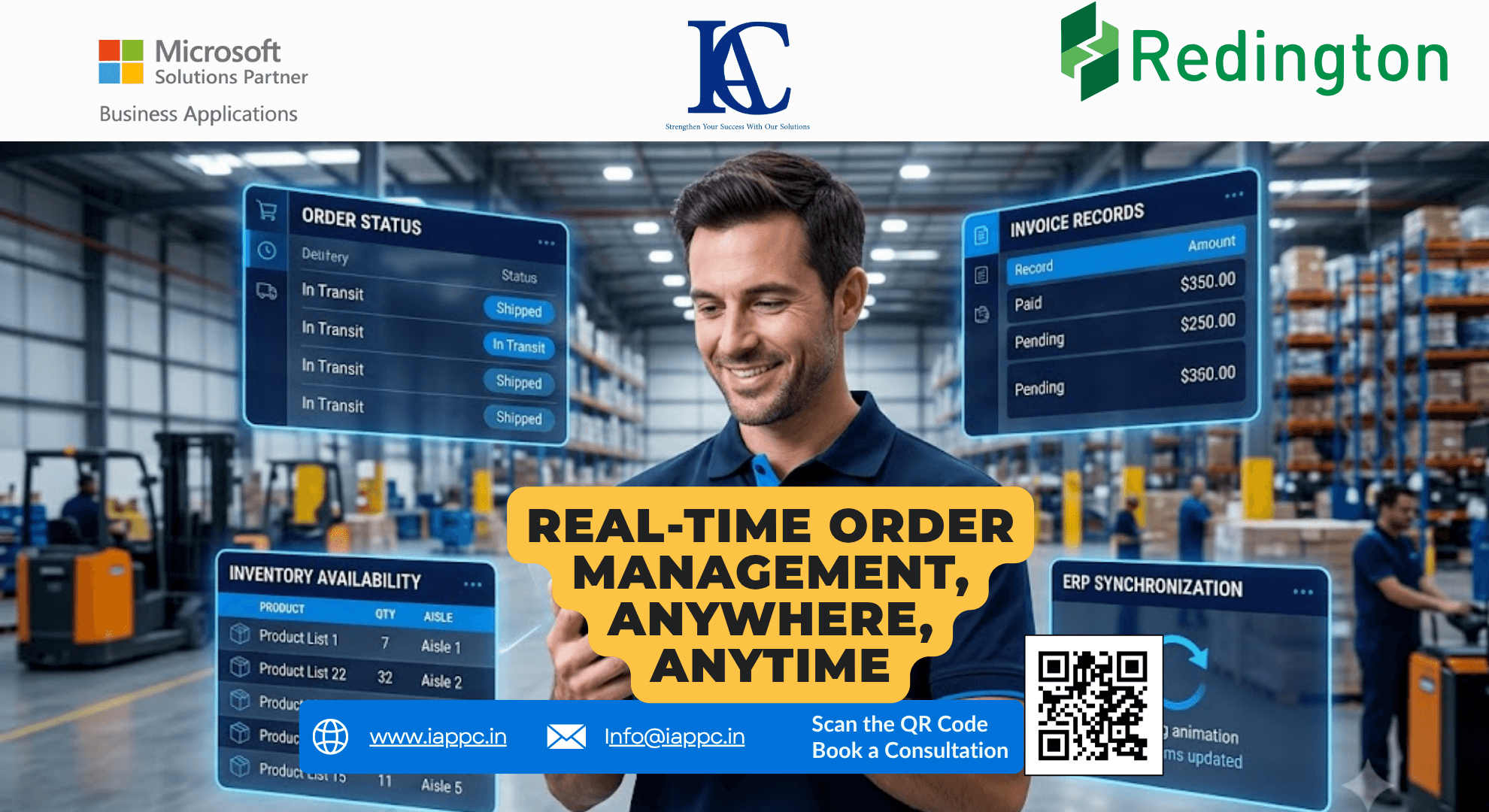
Sales, orders, and invoices without the copy-paste
If you run a distribution or trading business, you already know how orders really come in. A dealer sends a 40-line order on WhatsApp at 9 pm. Another customer emails an Excel sheet on Monday morning. A salesman calls from the road and someone jots it down on whatever paper is nearby. By the time it all reaches the billing desk, nobody's sure which version is right. Three channels, one billing desk.
That's where things slip. Orders get processed late. Invoices carry typos. The same details are typed twice, and you can't see what's happening without asking around.
Real-time order management and invoice automation fix the plumbing. Orders land in one place, flow into your ERP, and turn into invoices without anyone retyping them. Innovative TechPlus builds these connections between sales workflows and ERP systems, so your team spends less time chasing information and more time with customers.
1. Take orders from anywhere
Your salespeople don't work from a desk. They're at a dealer's shop, on the highway, or standing in a customer's godown with a phone in hand. A digital order workflow lets them capture the order right there instead of writing it down and typing it in at 7 pm.
Here's what changes day to day:
Orders are captured at the source, so nobody re-enters them in the office.
Anyone who needs an order can look it up instead of calling a colleague who may or may not pick up.
Approvals move faster.
Sales, inventory and fulfilment all see the same order at the same time, which means the warehouse stops finding out about a rush order by phone.
When everyone's looking at the same current information, a customer asking "where's my order?" gets an answer in 2 minutes instead of an afternoon of phone tag.
2. Invoices that match the order
Invoicing sits at the centre of order-to-cash. Done by hand, small gaps pile up. A 10% discount gets applied on one screen but not the other. A quantity of 500 becomes 50 somewhere along the way. An invoice goes out three days late, and the customer's payment goes out three days late too.
Automation pulls invoice details from validated order and ERP data, so the numbers agree from the start. You can track which invoices are paid and which are still outstanding, and link invoices to your accounting records without a second round of entry.
You get a clearer picture of sales and receivables. Your accounts team stops playing detective.
3. Connect it to your ERP
Automation works best when it's wired into the system you already run the business on. With a properly configured ERP integration, order and invoice workflows can work with your customer, item, inventory, sales, and financial records. The data lives in one place, and nobody keys the same thing in twice. Most teams start small, with order capture for their top 20 customers, and add invoicing once that's running.
If you're on Microsoft Dynamics 365 Business Central, supported sales workflows can connect directly to core Business Central operations. What's possible depends on how your solution is configured and which permissions are set.
4. What it can do for sales performance
Growing sales isn't only about finding new enquiries. It's also about how fast you turn an order into a delivery, how quickly you answer a customer, and how well you keep track of your pipeline.
Automation helps by cutting the wait between capturing an order and processing it, taking admin work off your sales team, and speeding up hand-offs between departments. You also get a clear view of every open customer order. Picture a team of 10 salespeople who each lose an hour a day to order entry. That's 10 hours of selling gone every single day. Hand that hour back, and people can call customers and chase new accounts, which is the work they're actually good at.
Client result: 40% improvement in sales and order operations
One of our clients achieved a 40% improvement in sales and order operations with order and invoice automation. Your own numbers will depend on your current process, how the system is set up, and whether your team uses it.
5. Who gets the most out of it
Distributors and wholesalers: you've got recurring orders and plenty of repeat customers, so every saved minute adds up.
Trading companies: sales, orders, invoicing, and accounts all have to talk to each other, and right now they probably don't.
Stockists and dealers: you want order information without a phone call.
Growing B2B businesses: once you pass a few hundred orders a month, Excel and WhatsApp threads stop keeping up.
Frequently asked questions
What is real-time order management?
It gives you current access to order information, so you can capture, approve, process, and track orders in one connected workflow.
Can it integrate with an ERP?
Yes. Depending on your ERP and how the integration is designed, order workflows can connect to customer records, inventory, sales transactions, invoicing and financial data.
How does invoice automation help distributors?
It cuts repetitive data entry, keeps invoices consistent with orders, makes it easier to see what's been paid, and links sales to your accounting records.
Can automation really deliver a 40% improvement?
One of our clients did, in sales and order operations. Results vary because they depend on demand, how your team sells, your current process, and the implementation.
Make every order easier to manage
Good order and invoice handling gives a growing business firmer ground to stand on. Innovative TechPlus connects real-time order workflows, invoice automation, and ERP integration so your team retypes less and sees more of what's happening.
Want to see what that could look like for your business?
Talk to Innovative TechPlus about order management automation and ERP integration: https://www.iappc.in/