ERP Implementation for NBFCs and Logistics Companies in India: A Practical Guide
See how Indian NBFCs and logistics operators replace fragmented lending and fleet spreadsheets with real-time ERP visibility and automated MIS.
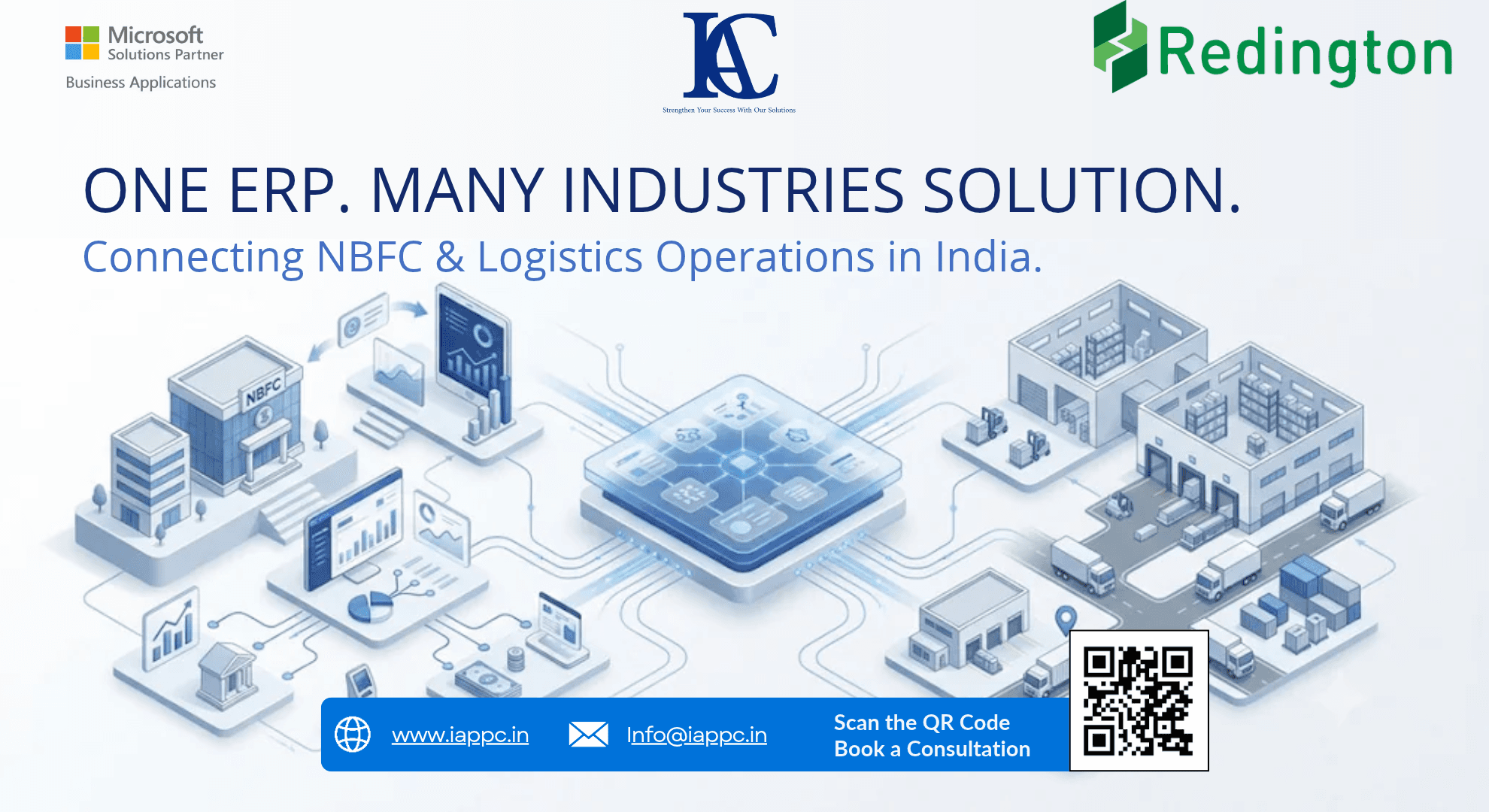
ERP Implementation for NBFCs and Logistics Companies in India: A Practical Guide
By the Innovative Techplus (IAPPC) team | Updated November 2026
An ERP implementation for an Indian NBFC or logistics company usually runs through seven stages: blueprint, configuration, data migration, integrations, testing, go-live, and hypercare. How long it takes depends less on the software than on three things: how many branches you run, how clean your data is, and how many outside systems (loan management, TMS, GPS, e-way bill, credit bureaus) have to talk to the ERP. This guide covers each stage, what changes for lenders and for transporters, why projects stall, and how we'd pick a partner if we were in your seat.
The seven stages of an ERP implementation
Two decisions made early save a lot of pain later. First, pick a go-live date that isn't quarter-end or audit season. Second, decide whether you'll run the old and new systems in parallel for one close. For a lender with a large loan book, a parallel run is cheap insurance.
ERP implementation for NBFCs: what's different
A lending business has to get a few things right that a generic ERP rollout doesn't worry about.
Loan book migration. You'll move opening balances account by account: principal, accrued interest, penal charges, and days past due. Tie every figure back to the general ledger before go-live. A mismatch of a few rupees across thousands of accounts can eat days of reconciliation time.
Who owns the loan sub-ledger? Either the ERP holds loan accounts directly, or a separate loan management system posts summarised entries into it. Both work. Unclear ownership doesn't work, so settle it in the blueprint.
Regulatory reporting. Scale-Based Regulation puts NBFCs into layers with different compliance loads. Depending on your category, you'll also deal with asset classification and provisioning under IRACP norms, or expected credit loss under Ind AS 109 if it applies to you, plus credit information company reporting and KYC. Ask which reports come out of the box and which ones you'll have to build, and check the current RBI directions with your compliance team.
Branch consolidation and collections. Management wants a portfolio view across branches and doesn't want to wait for each one to send a file. The ERP should roll branch data up on its own and keep an audit trail for every change.
If you're weighing options for a lending business, see our NBFC solutions.
ERP implementation for logistics companies: what's different
A logistics rollout lives or dies on the path from booking to cash.
Booking to billing. A consignment moves from LR to dispatch, then e-way bill, delivery, proof of delivery,, and freight invoice. The usual delay sits at the end: the invoice can't go out until someone has a signed POD in hand. A mobile e-POD that feeds straight into billing shortens that gap.
e-Way bill integration. Generating the e-way bill from inside the ERP removes re-keying on the government portal. Rules and portal behaviour have changed more than once, so ask how the integration handles rule changes, portal downtime,, and validity extensions without a rebuild.
Trip costing. Fuel, FASTag, toll, driver advances and maintenance should post against the vehicle and the trip. That's the only way to see which lanes make money.
Hired vehicles and GST. If you pay market vehicles, decide how those payments, TDS, and GST treatment for transport services (including reverse-charge cases) will be handled. Confirm the rules with your tax advisor before configuration.
Warehouses. With several locations, stock transfers and availability have to be updated in one place, not in a file per site.
You can read more on our logistics solutions page.
What drives ERP timeline and cost
Nobody can give you an honest number before discovery. Here's what moves both the schedule and the budget:
Number of branches and legal entities
Modules in scope on day one
Quality of your existing data
Number of integrations
Amount of customisation
Training needs and the number of users
Licensing model and support terms
Be careful with a fixed quote that arrives before anyone's looked at your processes. Ask for a phase-wise plan instead, with clear scope, assumptions, and a change-request process.
Why ERP implementations fail, and what to do about it
Scope keeps growing. Start with the workflows causing the most pain, such as month-end MIS or POD-to-billing, and add the rest in later phases.
Dirty data goes in. Clean masters and opening balances before the first trial load, not after.
Nobody owns the process. Name a business owner for finance, lending, or dispatch. IT alone can't make those calls.
The system copies the spreadsheet. If you rebuild every Excel quirk, you've paid for a slower spreadsheet.
Training gets squeezed. Branch users who don't trust the system go back to their own files within weeks.
Go-live lands at the worst time. Quarter-end and audit season leave no room to fix problems.
How to choose an ERP implementation partner
Here's what we'd ask every shortlisted partner, ourselves included:
Which NBFC or logistics rollouts in India have you completed, and can I speak to one of those clients?
Who will configure the system, and who will be my day-to-day contact?
How will you migrate and reconcile my opening balances?
What happens when GST, e-way bill, or RBI requirements change after go-live?
What does support look like in the first three months, and after that?
What's included in the quoted scope, and how are change requests priced?
Where Microsoft Dynamics 365 Business Central fits
Innovative Techplus is a Microsoft solutions partner. Business Central covers finance, purchasing, inventory, and reporting, and it can be extended or connected to other systems. For a logistics company, that can mean finance and warehouse stock in one place, with dispatch and e-way bill workflows connected around it. For an NBFC, loan origination and servicing usually involve additional components or integrations, so fit depends on your products and volumes. We'd confirm that during discovery rather than promise it up front. See our Business Central services.
Frequently asked questions
How long does ERP implementation take for an NBFC or logistics company in India?
There's no fixed number. A logistics firm with a few branches and standard modules can move faster than a multi-branch lender with a legacy loan book and bureau integrations. Ask for a phase-wise plan after discovery rather than a timeline on the first call.
What does ERP implementation cost?
Cost depends on modules, users, branches, integrations, customisation, and the licensing model. A credible estimate comes after a discovery workshop, and it shouldn't arrive without the scope and assumptions written down.
Can we keep using Excel during the rollout?
Yes, for a short period. Many teams run the old and new systems side by side for one month-end close, then retire the spreadsheets once the numbers tie out. Don't rush that step.
Do an NBFC and a logistics business need different ERP setups?
Yes. Lending needs loan accounting, regulatory reporting, and portfolio MIS. Logistics needs dispatch, e-way bill, e-POD, trip costing, and warehouse stock. A single platform can support both, but each needs its own configuration.
What should we prepare before the first meeting with a partner?
You'll want a list of your current systems and spreadsheets, a sample of the MIS reports you rely on, your chart of accounts, a sample of loan or shipment data, and a list of the integrations you need.
Plan your ERP rollout with Innovative Techplus.
If you're mapping out an ERP project, talk to our team about your branches, systems, and reporting needs. You can also read our wider take on moving off spreadsheets in ERP for NBFC and logistics in India.