The End of the Application Black Hole: 5 Ways Agentic AI is Reclaiming the Human in HR
How Agentic AI is reshaping recruitment with intelligent candidate matching, automated screening, improved hiring efficiency, and enhanced candidate experiences.
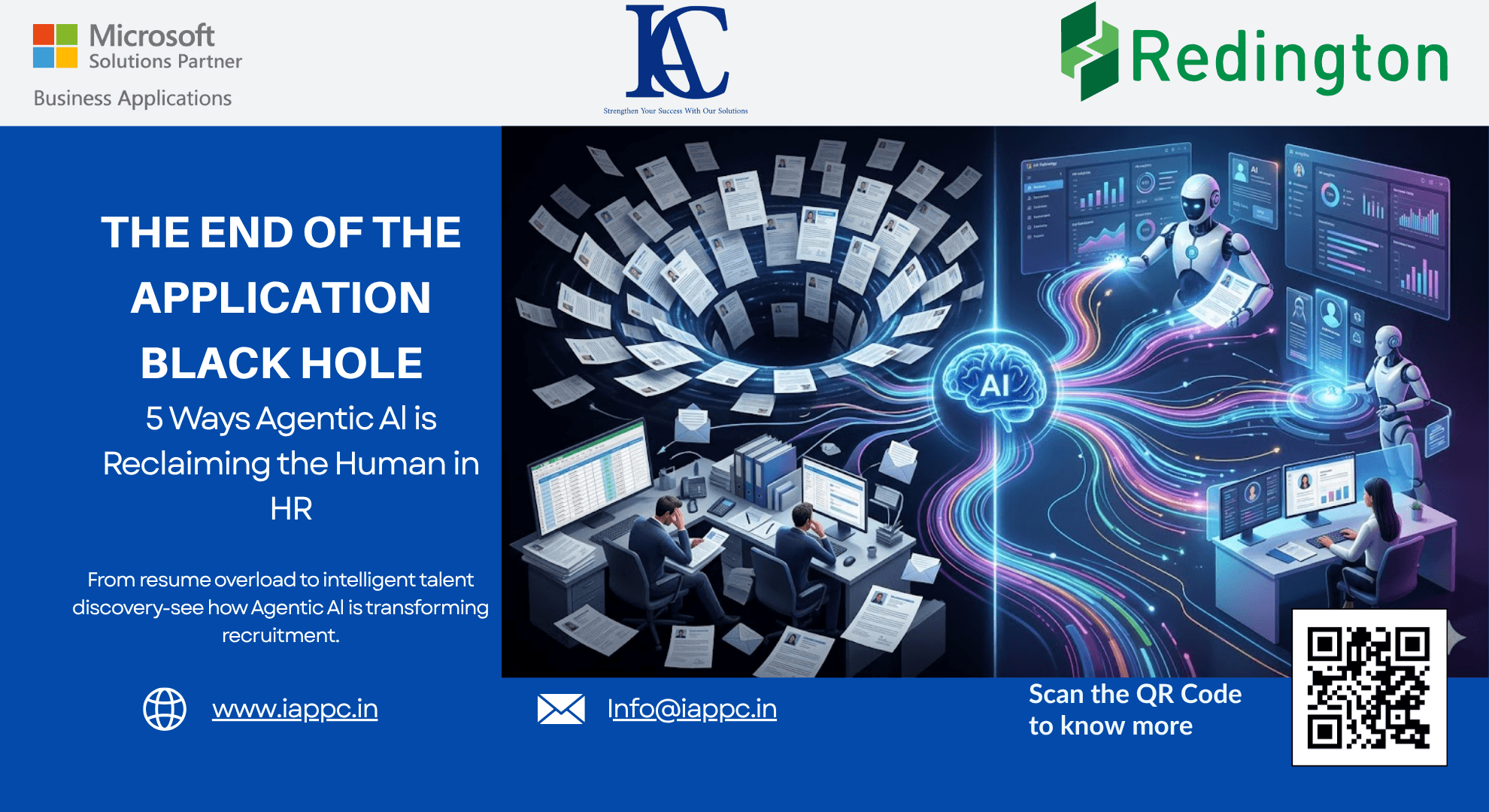
Introduction: HR Was Never Meant to Be a Processing Center
For decades, recruitment teams have been trapped in a paradox. Human Resources is fundamentally about people, yet recruiters spend a significant portion of their time managing systems, reviewing resumes, scheduling interviews, and navigating administrative tasks.
Traditional Applicant Tracking Systems (ATS) promised efficiency, but most evolved into digital filing cabinets—repositories of resumes rather than engines of talent discovery. As application volumes increased, organizations unintentionally created what many recruiters now call the Application Black Hole: a hiring environment where valuable candidate information disappears into databases, never to be fully explored or utilized.
The challenge is not a shortage of talent. It is a shortage of visibility.
Most organizations possess vast amounts of candidate data, but much of it remains unstructured, difficult to search, and disconnected from actual hiring decisions. As a result, qualified candidates are overlooked, recruiters become overwhelmed, and hiring cycles continue to grow longer.
Today, a new generation of technology is changing that reality.
The rise of Agentic AI marks a significant shift from passive recruitment systems to intelligent hiring agents capable of understanding context, making recommendations, and continuously improving outcomes. Rather than replacing recruiters, Agentic AI is helping them focus on what matters most: building relationships, evaluating potential, and creating exceptional candidate experiences.
This is not simply another wave of automation. It is the beginning of a more human-centered approach to hiring.
1. Beyond Rules-Based Automation: The Rise of Agentic AI
For years, recruitment technology relied on predefined rules.
Traditional systems could perform tasks such as:
Filtering resumes by keywords
Tracking applications
Sending automated emails
Organizing candidate pipelines
While useful, these systems remained reactive. They could only operate within the limits established by human configuration.
Agentic AI changes this model entirely.
Instead of following rigid instructions, AI agents can interpret context, analyze large volumes of information, identify patterns, and take action based on objectives rather than simple rules.
For recruitment teams, this means moving beyond keyword matching toward intelligent talent evaluation.
Modern AI hiring agents can:
Analyze candidate profiles holistically
Understand job requirements contextually
Recommend qualified applicants
Prioritize hiring actions
Engage candidates proactively
Support recruiters throughout the hiring lifecycle
Platforms such as TalentSynth demonstrate how AI agents can transform recruitment from a transactional process into a strategic capability.
The result is a shift from administrative recruiting to intelligent talent acquisition.
2. Turning Recruitment Efficiency into Strategic Value
One of the biggest challenges facing talent acquisition teams today is scale.
Organizations may receive hundreds or even thousands of applications for a single role. Reviewing every application manually creates bottlenecks that slow hiring and increase recruiter workload.
Agentic AI addresses this challenge by automating time-intensive activities while maintaining consistency and accuracy.
Key areas where AI creates value include:
Faster Candidate Discovery
AI agents can search candidate databases and identify qualified talent in seconds.
Instead of manually analysing profiles, recruiters receive prioritised recommendations that are aligned with hiring needs.
Accelerated Screening
AI-powered resume analysis helps recruiters quickly identify candidates who meet the necessary qualifications.
Reduced Administrative Work
Interview scheduling, candidate communication, and status updates can be managed automatically, freeing recruiters to focus on high-value interactions.
Better Resource Allocation
When repetitive work is automated, recruitment teams can dedicate more time to employer branding, workforce planning, and candidate engagement.
The result is not simply cost savings. It is the transformation of recruitment into a strategic business function.
3. The Candidate Experience Paradox: Why More AI Can Feel More Human
Many organizations initially worry that introducing AI into hiring will make recruitment feel impersonal.
However, candidate expectations have changed dramatically.
Today's applicants expect:
Immediate responses
Transparent communication
Faster hiring decisions
Convenient scheduling
Personalized interactions
Traditional recruitment processes often struggle to meet these expectations.
Candidates frequently experience:
Delayed responses
Application silence
Scheduling friction
Lack of feedback
This is where Agentic AI creates a surprising advantage.
AI-powered hiring assistants can provide:
24/7 Candidate Engagement
Candidates can interact with hiring systems whenever it is convenient for them.
Instant Communication
Questions can be answered immediately without waiting for the recruiter's availability.
Faster Scheduling
Interview coordination becomes seamless and automated.
Personalized Interactions
AI agents can tailor communication based on role, experience level, and hiring stage.
By removing unnecessary delays and administrative friction, organizations can create experiences that feel more responsive and candidate-focused.
The paradox is simple: when technology handles routine tasks effectively, recruiters gain more time for meaningful human interactions.
4. Fairness, Transparency, and Trust in AI-Driven Hiring
As AI becomes more involved in recruitment decisions, organizations must ensure transparency and fairness remain priorities.
Early generations of hiring technology often relied heavily on historical data and simplistic screening methods. This sometimes resulted in biased outcomes or limited visibility into decision-making processes.
Modern Agentic AI systems are evolving toward greater accountability.
Organizations are increasingly adopting AI frameworks that emphasize:
Explainability
Recruiters can understand why recommendations are being made.
Structured Evaluation
Candidates are assessed using consistent criteria.
Transparency
Hiring teams gain visibility into decision-making factors.
Continuous Improvement
Models can be monitored and refined over time.
Responsible AI is becoming a critical component of successful talent acquisition strategies.
The goal is not to remove human judgment but to support it with better information and more objective insights.
Organizations that prioritize transparency and trust will be better positioned to attract top talent while strengthening their employer reputation.
5. Beyond the Resume: Understanding the Whole Candidate
For decades, resumes served as the primary tool for evaluating talent.
While useful, resumes often provide an incomplete picture of a candidate's potential.
A resume tells recruiters where someone has worked.
It rarely reveals:
Adaptability
Leadership potential
Communication ability
Learning capacity
Problem-solving skills
Cultural alignment
Agentic AI is helping organizations move beyond resume-centric hiring.
AI Resume Screening
Advanced AI systems evaluate resumes against role requirements while identifying transferable skills and hidden strengths.
Resume Match Scoring
Candidates can be ranked based on alignment with job requirements, including:
Skills
Education
Experience
Location
Industry expertise
AI Candidate Matching
Rather than relying solely on keyword searches, AI evaluates contextual relevance and identifies candidates who may otherwise be overlooked.
Power Skills Analysis
Organizations can assess competencies such as:
Leadership
Strategic thinking
Collaboration
Adaptability
Communication
At TalentSynth, this approach helps organizations uncover talent that traditional screening methods frequently miss.
The result is a more complete understanding of candidate potential and stronger long-term hiring outcomes.
The Future Is Multi-Agentic
The future of recruitment will not be powered by a single AI assistant.
It will be driven by interconnected AI agents working together across the talent acquisition lifecycle.
Imagine an ecosystem where:
One agent sources talent
Another screen's applications
Another manages candidate engagement
Another coordinates interviews
Another provides hiring insights
Together, these agents create an intelligent hiring environment that continuously learns and improves.
This is the direction the industry is moving toward.
Recruiters will spend less time managing workflows and more time influencing workforce strategy.
Hiring leaders will gain deeper insights into talent pipelines.
Candidates will experience faster, more personalized recruitment journeys.
Most importantly, HR teams will have the freedom to focus on the uniquely human aspects of hiring.
Conclusion: Reclaiming the Human in Human Resources
The conversation around Agentic AI often begins with automation.
But its true value lies elsewhere.
The purpose of Agentic AI is not to replace recruiters.
It is to remove the administrative burden that prevents recruiters from doing their most important work.
As intelligent hiring platforms like TalentSynth grow, organizations will be able to better discover talent, engage candidates, and make hiring decisions with greater confidence.
The Application Black Hole was created by systems that stored information without understanding it.
Agentic AI changes that equation.
By transforming data into intelligence and automation into strategic action, it enables organizations to reclaim what has always been at the heart of recruitment: people.
The future of hiring is no longer human.
It is more human than ever before.